

Medicare Advisor in
Birmingham, Alabama

Navigating Medicare in Alabama can feel overwhelming, but you're not alone. As an independent Medicare advisor based in Birmingham, I understand the specific Medicare rules and options that apply here in Alabama and can guide you every step of the way as you move from your current health insurance to Medicare.

I'm here to make things easier and provide advice that fits your needs. My goal is to make signing up simple and stress-free by giving you clear, honest information so you can choose a plan that fits your life and budget. First, we'll review your key Medicare enrollment dates. There are two main enrollment periods you should know about:

Initial Enrollment Period

When you first become eligible for Medicare, usually around your 65th birthday, you have a 7-month window — 3 months before, the month of, and 3 months after your birthday — to sign up.

Special Enrollment Period

Certain life events, such as losing employer coverage, may allow you to sign up outside of the usual periods without a penalty.

Knowing these periods helps you avoid missing important deadlines or paying unnecessary penalties.

Get a Free Consultation

Turning 65? Get the Medicare info you need. Avoid penalties, get clear answers, make confident choices.

Original Medicare vs. Medicare Advantage

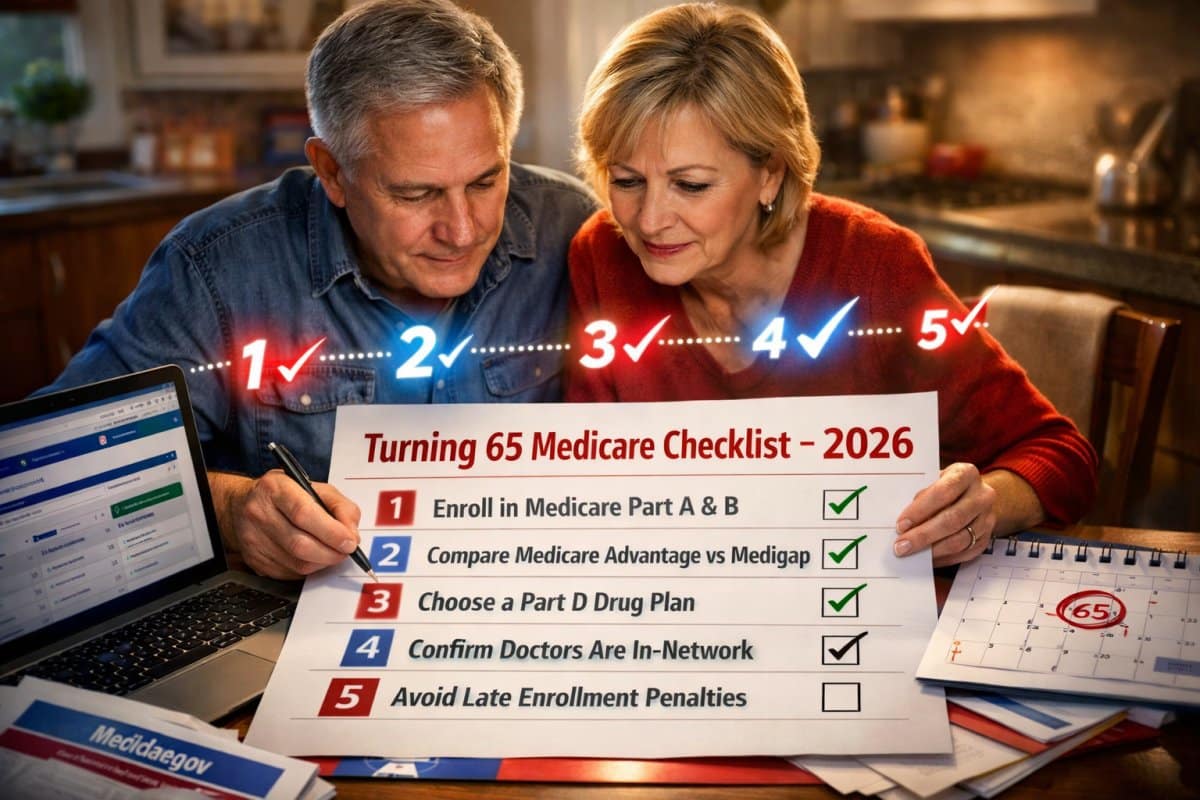
Couple at their kitchen table reviewing a Turning 65 Medicare checklist for 2026.

I'll help you review your Medicare plan options so you can keep seeing the doctors and hospitals you trust. It's important to understand how provider access differs between the two main types of Medicare coverage.

1

Original Medicare (Part A and Part B)

Original Medicare lets you see any doctor or hospital in the United States that accepts Medicare, and covers hospital stays and outpatient care. Medicare Supplement plans (Medigap) come with a monthly premium and help cover costs like deductibles, copayments, or coinsurance that Original Medicare does not pay, so you can have low, affordable, and predictable medical expenses. If a doctor or hospital accepts Medicare, they will also accept your Supplement, regardless of which insurance company provides the coverage.

If you want coverage for prescription drugs with Original Medicare, you can add a standalone Part D prescription drug plan. You may enroll in a Part D plan during your Initial Enrollment Period or, if you already have Medicare, during the annual Open Enrollment period. I can help you review your medication list to make sure you choose a Part D plan that covers your prescriptions at the best cost.

2

Medicare Advantage (Part C)

With Medicare Advantage you get your benefits through a private health plan that Medicare approved. These plans include Part A, Part B, and usually Part D. They have provider networks such as HMOs and PPOs, and you may be required to choose doctors and hospitals within these networks, which can sometimes limit your choices. With an Advantage plan, you could also face higher out-of-pocket costs for medical services.

Which is better: Medicare Supplement or Medicare Advantage?

A quick look at what each option typically costs in Alabama.

$107–$135
Average Alabama Medigap premium per month (65-year-old male nonsmoker)
$0
Monthly premium many Medicare Advantage plans start at
$35–$50
Typical Medicare Advantage specialist copay per visit
$9,250
2026 Medicare Advantage maximum out-of-pocket limit

Compared to Medicare Advantage plans, Medicare Supplement plans typically have higher monthly premiums. In Alabama, the average monthly premium for a Medicare Supplement plan (for a 65-year-old male nonsmoker) ranges from about $107 to $135, depending on your chosen coverage level and insurance company. Monthly premiums for females are lower. Still, they offer more freedom to choose any provider that accepts Medicare and can result in lower out-of-pocket costs when you use medical services. Out-of-pocket expenses for most common Medigap plans are quite low, with most office visits and hospital services covered after Medicare pays its share.

Medicare Advantage plans in Alabama often have monthly premiums as low as $0, but you could face higher out-of-pocket costs with serious and chronic illnesses. For example, each specialist visit might require a $35 to $50 copayment, and inpatient hospital stays can result in daily copayments that add up quickly. Frequent copayments for multiple medical appointments, alongside expenses from hospital stays, specialist visits, diagnostic tests, and treatments, can lead to unexpected costs. The maximum out-of-pocket cost for a Medicare Advantage plan in 2026 is $9,250, but some plans in Alabama offer lower out-of-pocket maximums.

Many treatments, procedures, and specialist visits under Medicare Advantage plans require prior authorization. This can lead to delays and possible denials of medically necessary care. Original Medicare, in contrast, has very few prior authorization requirements.

Considering both the costs you pay each month and the costs you may pay when you need care can help you decide which option is better for your needs. I can explain how each of these works and help you figure out which type is right for you — when you're ready to take the next step with Medicare, contact me today and let's start this journey side by side.


Medicare Advisor in Birmingham, Alabama

Navigating Medicare in Alabama can feel overwhelming, but you’re not alone. As an independent Medicare advisor based in Birmingham, I understand the specific Medicare rules and options that apply here in Alabama and can guide you every step of the way as you move from your current health insurance to Medicare.

I’m here to make things easier and provide advice that fits your needs. My goal is to make signing up simple and stress-free by giving you clear, honest information so you can choose a plan that fits your life and budget. First, we’ll review your key Medicare enrollment dates.

I’ll help you review your Medicare plan options so you can keep seeing the doctors and hospitals you trust. No matter where life takes you, at home or on the road, you’ll have nationwide access to doctors and hospitals.

I’m ready to answer your questions and guide you through every option available. There are a few main types of Medicare plans:

Original Medicare (Part A and Part B) lets you see any doctor or hospital that accepts Medicare, and covers hospital stays and outpatient care. Medicare Supplement plans (Medigap) come with a monthly premium and help cover costs like deductibles or coinsurance that Original Medicare doesn’t pay, so that you can have low, affordable, and predictable medical expenses. If a doctor or hospital accepts Medicare, they will also accept your Supplement, regardless of which insurance company provides the coverage.

Medicare Advantage plans (Part C) are offered by private insurance companies, have low monthly premiums, and use networks such as HMOs and PPOs that can limit your choices of doctors and hospitals. With Medicare Advantage plans, you could face higher out-of-pocket costs with serious and chronic illnesses. Frequent copayments for multiple medical appointments, alongside expenses from hospital stays, specialist visits, diagnostic tests, and treatments, can lead to unexpected costs. Many treatments, procedures, and specialist visits under Medicare Advantage plans require prior authorization. This can lead to delays and possible denials of medically necessary care.  

I can explain how each of these works and help you figure out which type is right for you. When you’re ready to take the next step with Medicare, contact me today and let’s start this journey side by side.

 

What Sets 65 Plus Health Plans Apart

Local Independent Agent

No Fees for Phone Consultations or In-Home Appointments

Guiding You Through Each Step of the Enrollment Process

Compare Medicare Supplement Plans and Advantage Plans

Assessment of Prescription Drug Plans for Your Specific Medications

Ensuring a Smooth and Stress-Free Transition to Medicare

Understanding the 4 parts of Medicare.

Original Medicare, sometimes referred to as traditional Medicare, consists of Part A and Part B

Part A of Medicare (Hospital)

An inpatient stay at a hospital or skilled nursing facility.

Part B of Medicare (Medical)

Doctor services, outpatient care, diagnostic tests, and preventive services.

Part C of Medicare (Advantage Plans)

Private insurance companies that provide managed care plans have merits, but they also present significant drawbacks compared to Original Medicare, especially in terms of access to healthcare providers, out-of-pocket costs, coverage, and stability of the plan.

Part D of Medicare (Prescription Drug Coverage)

Medicare Part D is an optional private insurance plan that covers brand-name and generic medications you get at your local pharmacy. Part D plans also cover most vaccines.

Independent Medicare Advisor in Birmingham, Alabama

Medicare in Alabama can seem confusing, but you don’t have to figure it out alone. As an independent Medicare advisor, I’m here to make things simpler and offer advice that matches your needs. My aim is to help you sign up easily and without stress by giving you clear and honest information, so you can choose a plan that fits your life and budget. I’m here to answer your questions and explain your options. If you’d like help as you transition to Medicare, I’m ready to support you. Let’s connect and start this process together.

Smiling Older Couple Using Tablet Computer Watching Movie Online Indoor
Lined Circle

Understanding Your Medicare Options

Medicare can be confusing, especially with its four different parts. Learning about Parts A, B, C, and D will help you make the right choices when you sign up. As an independent Medicare advisor, I make things easier by giving honest advice. Because I am not tied to any one provider, my suggestions are always based on what is best for you. I will guide you through each step of the enrollment process. If you want to get started, you can book a free consultation with my independent insurance agency in Birmingham, AL. I will give you advice that fits your needs, so you can feel confident about your healthcare coverage.

Original Medicare has two parts: Part A, which covers hospital insurance, and Part B, which covers medical insurance. Medicare does not pay for all your hospital or doctor expenses. If you are looking for health insurance options for people 65 and older, I can help you find ways to keep your out-of-pocket costs low, affordable, and predictable, while making sure you can still visit the doctors and hospitals you trust. Reach out by phone or email, and I will help you choose the plan that fits your needs.

Medicare Advantage (Part C) offers plans from private companies that partner with Medicare. These plans usually have a set network of doctors and hospitals, which might limit your choices. Sometimes, your doctor needs approval before certain treatments or services, which can cause delays or even prevent you from getting the care you want. If you have questions, an independent Medicare advisor can help. I am here to guide you through Medicare Advantage Plans and help you decide if this coverage is right for you. Contact me today for clear and personal advice about your Medicare options.

Medicare Part D helps pay for prescription drugs you get at your pharmacy. It’s important to know how this part of your health insurance works. As an independent Medicare advisor, I can help you look at different Part D plans so you find one that covers your medications at the best price. Reach out today to set up a free consultation and discover the plan that fits your needs.

If you have questions about your Medicare options, I can help. As an independent Medicare advisor, I offer honest and personalized support to help you choose what works best for you. Call or email me to schedule an appointment and get started with confidence.

Understanding the 4 parts of Medicare.

Original Medicare, sometimes referred to as traditional Medicare, consists of Part A and Part B

Part A of Medicare (Hospital)

A stay as an inpatient in a hospital or at a skilled nursing facility.

Part B of Medicare (Medical)

Doctor services, outpatient care, diagnostic tests, preventive services.

Part C of Medicare (Advantage Plans)

Managed care plans offered by private insurance companies. While they can offer some advantages, they also have several significant disadvantages compared to Original Medicare, particularly regarding access to doctors and hospitals, out-of-pocket costs, coverage, and plan stability.

Part D of Medicare (Prescription Drug Coverage)

Medicare Part D is an optional private insurance plan that covers brand-name and generic medications you get at your local pharmacy. Part D plans also cover most vaccines.

Request a Consultation

Or

Fill Form Out this Form

"*" indicates required fields

Full Name*